 Guides · Emergencies
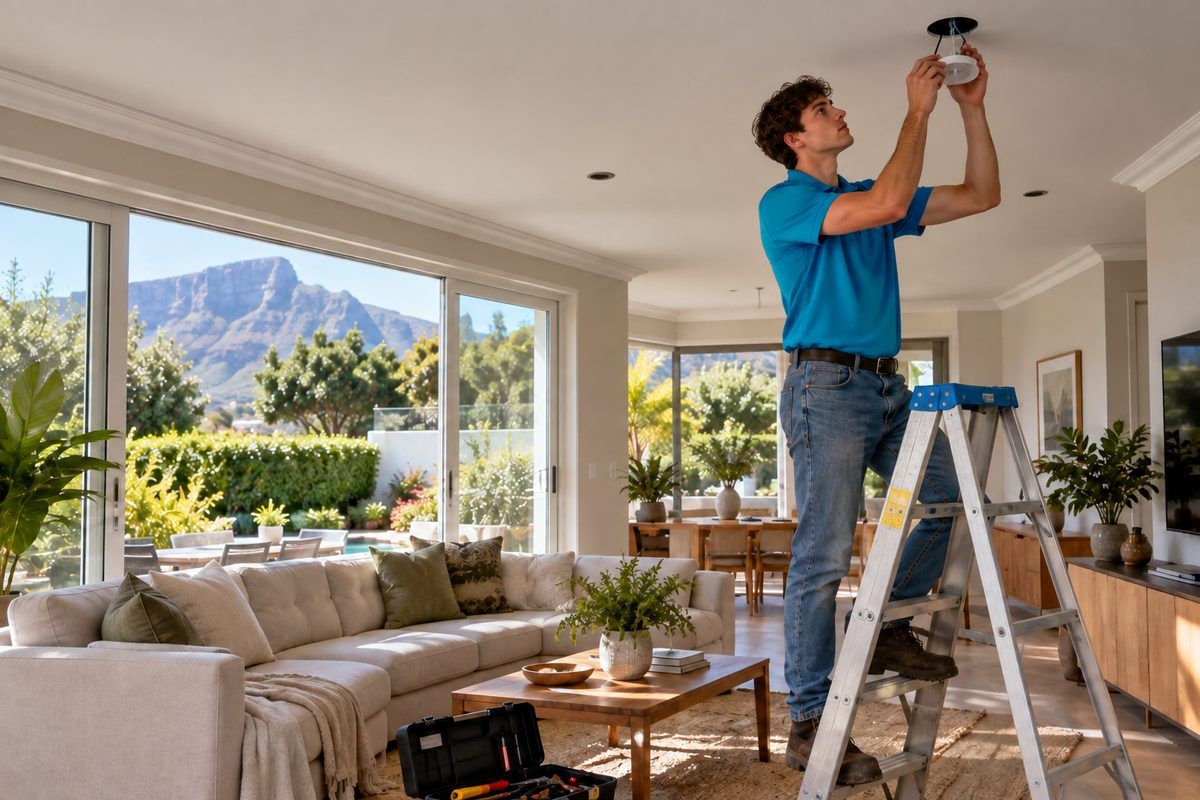
Camps Bay, Clifton, Bantry Bay, Fresnaye and Sea Point sit on the Atlantic side of the peninsula, right against the sea. Homes there are often multi-storey, built on slopes, and fitted with large glass doors, lifts, pool pumps, heat pumps and security gates that all need power. When load-shedding or a fault cuts the supply, an inverter and battery keep those running. Here is what is different on this coast.
What makes the Atlantic Seaboard different
- Salt air. Terminals, isolators and enclosures corrode faster near the sea. Choose a protected spot for the inverter and battery, and have connections checked on a schedule.
- Space and access. Steep sites, tight garages and apartment layouts limit where a battery can go. It needs ventilation, shade and a clear route for cables.
- Heavier loads. Pool pumps, heat pumps, underfloor heating, air-conditioning and lifts decide how big the system must be. We start with what you want to keep running, then size from there.
- Body corporates and heritage rules. Apartments and some older streets have extra approval steps. Ask early.
Solar panels as well
We install solar panels together with the inverter and battery, or add them later. On the Atlantic Seaboard the roof, wind exposure and shading from the mountain decide how many panels fit, so we look at the roof before we quote.
What you can run on a battery
Most owners start with the essentials: lights, fridge, Wi-Fi, TV, gate and alarm. Larger systems can carry the pool pump, a heat pump or part of the kitchen. Ovens, geysers and air-conditioning use the most power, which is why we ask you to list what must stay on before we recommend anything. See our guide to inverter costs for how size affects price.
City approval comes first
An inverter that feeds back to the grid, or a battery on a grid-tied inverter, needs the City of Cape Town's authorisation. It must not be switched on before commissioning, and an electrical certificate on its own is not approval. The details are in our City requirements guide.
Servicing by the sea
Salt air is the reason to schedule checks. Our servicing guide lists what we look at.
Where we work
Camps Bay, Clifton, Bantry Bay, Fresnaye, Sea Point, Hout Bay, Bishopscourt, Constantia, Newlands, Claremont and the South Peninsula. Certificates of compliance for property transfers are available anywhere in the Cape Town municipal area.
Common questions
Do you install inverters in Camps Bay and Clifton?
Yes, we do inverter and battery work in Camps Bay, Clifton, Bantry Bay, Fresnaye and Sea Point as well as the Southern Suburbs. Message us on 074 490 3100 and we will arrange a site visit.
Does sea air damage an inverter?
Salt in the air corrodes terminals, enclosures and fixings over time. Where the unit goes, how it is enclosed, and how often it is checked all matter more near the sea than inland.
Do I need the City's approval for an inverter with a battery?
Yes. The City of Cape Town requires authorisation for grid-tied solar PV, with or without a battery, and for a battery with a grid-tied inverter. It must not be switched on before it is commissioned. Our Constantia and Bishopscourt guide sets out the steps.
Can I put an inverter in my apartment in Clifton or Sea Point?
Possibly, but the body corporate usually has a say on where equipment goes and on cabling through common property. Ask the managing agent for the rules first.