
 Guides · Emergencies
Geysers rarely burst at a convenient time. If you're dealing with water coming through the ceiling in Muizenberg, Steenberg or Diep River right now, these are the steps that matter most, in order.
The first ten minutes
- Close the water first. Close the cold water isolating valve on the pipe going into the geyser. If you can't find it or reach it safely, close the main water supply at the meter. Every minute the water runs, it is damaging your ceiling, so this comes first.
- Then switch off the geyser's power. Turn off the geyser circuit breaker or isolator at the distribution board. Many older geysers are not installed to current regulations and can drain empty, and an element left on in an empty tank burns out. If the board itself is wet, or water is near plugs and lights, don't touch it: stay away from wet electrics and phone us.
- Open a hot tap. This relieves the pressure in the system and helps drain water away from the leak.
- Protect what you can. Buckets under the worst drips, and move electronics, rugs and furniture out of the way. If the ceiling is bulging with water, keep people out from under it.
- Take photos. Your insurer will want to see the damage.
Call your insurer
A burst geyser is usually covered by home insurance, along with the damage it caused. Call your insurer's claims line to get a claim number. Some insurers prefer to send their own appointed plumber. If you'd rather use us, tell them. Either way, get the water stopped first.
What happens when we arrive at night
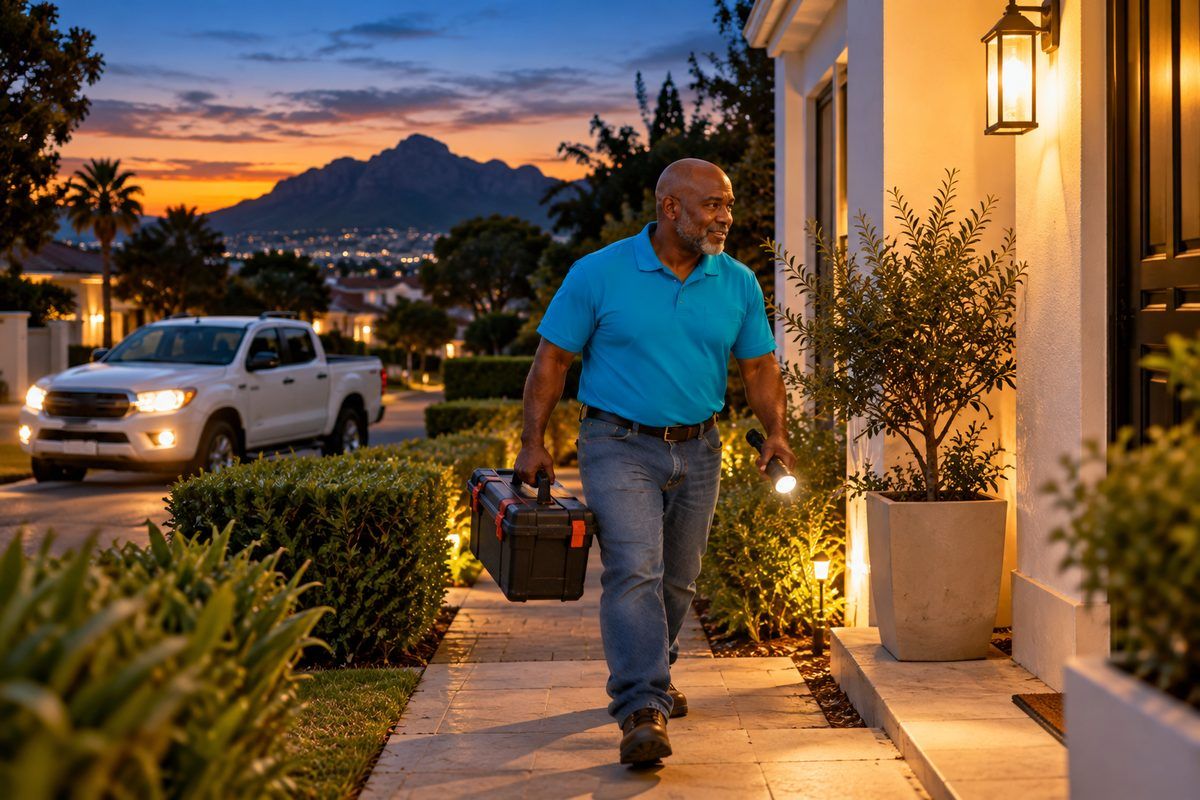
At night, the priority is to make the house safe and stop the damage. We isolate the water and power, check that nothing is live that shouldn't be, and make sure the leak is contained.
A full geyser replacement is usually a daylight job. Working on a roof and in a ceiling void in the dark isn't safe, and a replacement done in a rush is often done badly. So the honest approach is: stop it tonight, replace it properly the next day. We'll give you a quote before we go, and the replacement is done to current standards with a compliance certificate.
Why the rest of the installation matters
When a geyser is replaced, the valves, drip tray and pipework around it often need bringing up to current regulation too. Insurers typically pay for the geyser itself but not for bringing the rest of the installation up to standard. If your geyser is leaking rather than burst, our guide to leaking geysers explains what the leak usually means. We'll show you, in writing, which part the insurance covers and which part doesn't, before any work starts.
Homes in Muizenberg, Steenberg and Diep River
Muizenberg's old village sits on the lower slopes of the mountain, and the stretch of Main Road towards St James has the only remaining group of early 1900s Edwardian beach houses in South Africa. A house that old has usually had its geyser replaced several times, and every replacement is a chance for the valves, drip tray and overflow to fall behind the current standard. Close to the beach, salt air also wears valves and fittings out faster.
Around Zandvlei, Marina da Gama was built in the 1970s, and Steenberg borders the same vlei. Homes of a similar age often reach the end of their original geysers and pipework around the same time, so when one part fails it's worth checking the rest. Further inland in Diep River, the pattern is the same: a geyser ageing quietly in the roof until the night it gives way.
After-hours help in Muizenberg, Steenberg and Diep River
Our office is in Fish Hoek, a short drive from Muizenberg, Marina da Gama, Lakeside, Steenberg, Retreat and Diep River. We cover the whole Southern Suburbs and South Peninsula for emergencies, day and night. For anything that isn't an emergency after hours, WhatsApp us and we'll reply first thing the next morning. Office hours are Monday to Friday 07:30 to 17:30 and Saturday 08:00 to 13:00.
Common questions
What should I do first if my geyser bursts?
Close the cold water valve into the geyser, or the main water supply at the meter, first. Then switch off the geyser's power at the distribution board, unless the board is wet. Open a hot tap to relieve pressure, and keep away from wet electrical fittings.
Is a burst geyser covered by insurance?
Usually, yes, along with the resulting damage, but check your policy. Call your insurer's claims line for a claim number as soon as the water is stopped.
Can a burst geyser be replaced at night?
Usually it's safer and better to replace it in daylight. At night we stop the damage and make the house safe, then return to replace the geyser properly.
Does insurance pay for the new valves and drip tray?
Insurers typically pay for the geyser itself. Bringing the rest of the installation up to current regulation is usually not covered. We explain the split in writing before any work begins.