
 Guides · Geysers
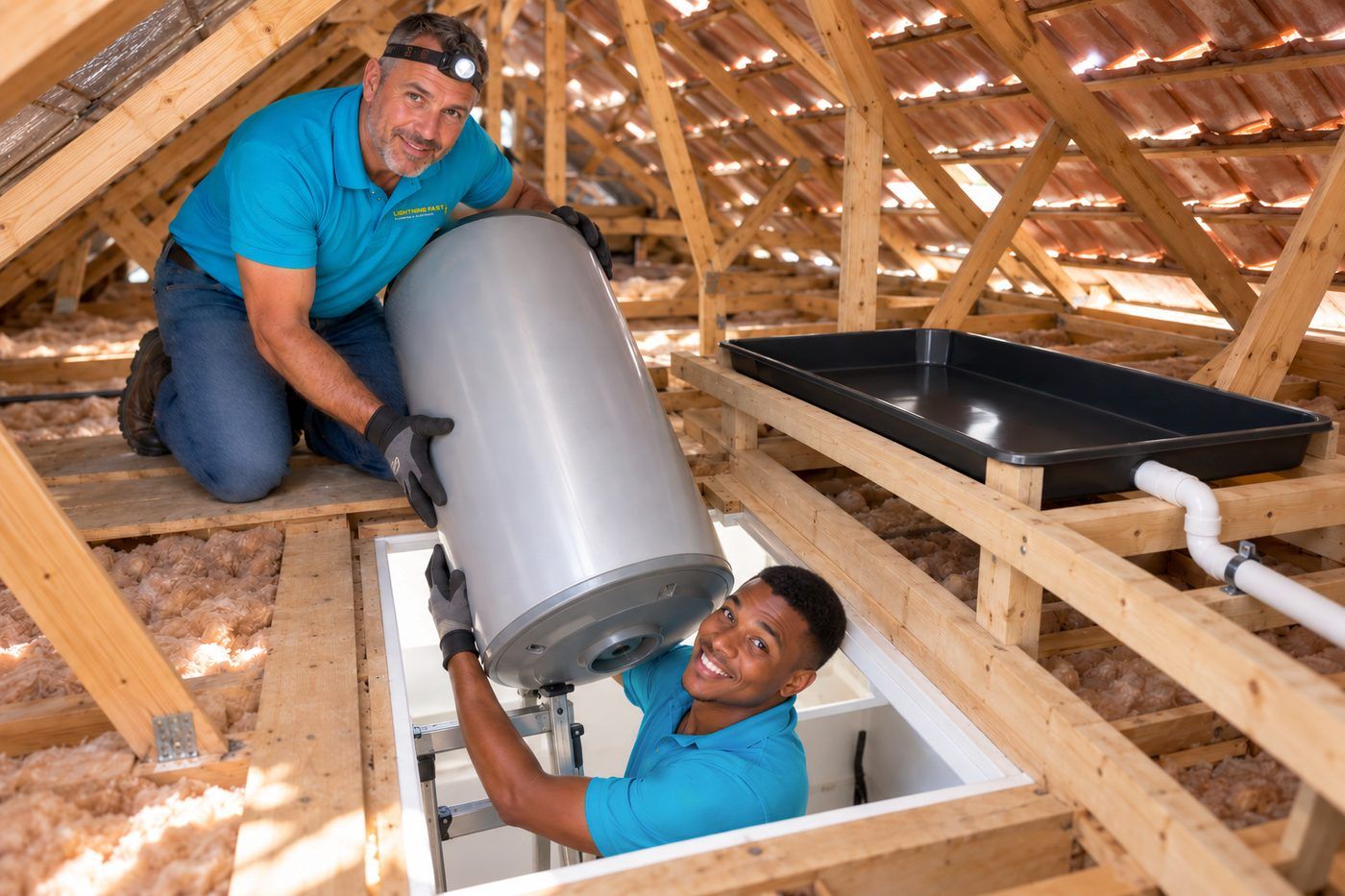
A leaking geyser is one of the most common calls we get across the Southern Suburbs, and it's rarely a mystery once you know where to look. Some causes are urgent. Some can wait a day or two. Here's how to tell the difference, and what's actually happening inside the cylinder.
First, is it actually the geyser?
Water showing up on a ceiling or running down a wall doesn't always mean the geyser itself is leaking. It can also be a pipe joint, the pressure control valve, or condensation on a cold water line. If you can get to the geyser safely, look for where the water is actually coming from before assuming the worst.
The usual suspects
- Leaking from the pressure control valve (PCV). This is the most common cause by far. A small, occasional drip from the valve on the side of the geyser is often normal, it's relieving excess pressure. A steady drip or a constant trickle usually means the valve needs replacing.
- Leaking from the pressure relief or safety valve. Similar to the PCV, but worth checking separately, if it's discharging constantly rather than occasionally, that's a sign of a pressure problem elsewhere in the system, not just a worn valve.
- Leaking from the thermostat or element. The rubber gasket around the thermostat or element housing hardens over time. Once it fails, water seeps out around the fitting, not from a crack in the tank itself.
- Leaking from the anode. The sacrificial anode protects the tank from corrosion from the inside. Its own seal can start leaking as it wears down, which is actually a sign the anode has been doing its job.
- Leaking from the top, bottom or side of the tank itself. This usually means the inner tank has corroded through. Geysers don't last forever, most are rated for around 8 to 10 years, and once the tank itself has failed, it can't be repaired, only replaced.
- Leaking from the overflow pipe. If water is coming from the overflow pipe outside the house rather than inside, that's often the pressure valve doing exactly what it's meant to, but a constant flow still needs checking.
- A fitting or union has come loose. The joints where pipes connect to the geyser can work loose over time, especially after a job was done by someone in a hurry.
- The drip tray or its drain pipe is blocked or missing. Sometimes the geyser isn't leaking any more than usual, the drip tray meant to catch normal condensation and small drips has simply overflowed or was never properly plumbed to drain outside.
What's urgent, and what isn't
Uncontrolled water that's actively damaging your ceiling, walls or floors, and that you can't stop, is an emergency. Call immediately.
A slow, contained drip into a drip tray that's draining properly is worth booking in soon, but it's not the kind of thing that needs a midnight call-out. A geyser that's simply making noise can wait for a booked visit. No hot water at all is different: we'll come out for that day or night, with no after-hours charge. It's usually a thermostat or element, not a leak.
What we do when you call
We isolate the water first, so the damage stops getting worse. From there it's a proper inspection, not guesswork: we check the valve, the tank, the fittings and the drip tray, and tell you exactly what's causing it and what it'll take to fix, with a fixed, itemised quote before we start anything.
Geyser repairs across the Southern Suburbs
We handle leaking and burst geysers throughout the Southern Suburbs, from Fish Hoek, Bergvliet and Steenberg through to Pinelands, Rosebank, Ottery and Harfield Village, and down the South Peninsula to Muizenberg, Noordhoek, Kommetjie, Simon's Town and Scarborough.
Common questions
Should I turn off my geyser if it's leaking?
Yes. First close the cold water inlet valve to the geyser if you can reach it safely, or the main stopcock at the meter. That stops the tank refilling and takes away the pressure driving the leak. Then switch off the geyser at the distribution board, so the element can't burn out if the tank drains. If the board is wet, don't touch it.
How do you know if a geyser is about to burst?
Warning signs include rust-coloured water, a popping or rumbling noise from the tank, a steadily worsening leak, or visible corrosion on the tank itself. Any of these is worth having checked before it fails completely, rather than after.
Does a plumber or an electrician fix a geyser?
Both, depending on the fault. Leaks, valves and pipework are plumbing. Thermostats, elements and wiring are electrical. Since a geyser problem can turn out to be either once it's actually inspected, we send technicians qualified in both, so you're not caught between two different callouts and two different bills.
How much does it cost to fix a leaking geyser?
It depends entirely on the cause, a valve replacement is a small job, a full geyser replacement is a larger one. We inspect first and give you a fixed, itemised quote before any work starts, so you know the real number for your situation rather than a generic estimate.
Why geysers give way in a Cape Town winter
Cape Town gets most of its rain in winter, and that's also when geysers work hardest. Colder incoming water means longer heating cycles and more expansion and contraction in the tank and valves. A geyser that has been weeping quietly all summer often gives way in June or July. If yours is showing early signs, it's cheaper to deal with it before the cold sets in, and a burst in the roof space is far more damaging than a planned replacement.
Still running an old low-pressure geyser? Read how we replaced a 60-year-old geyser rated in gallons, in a space with no room for the valves.
If water is pouring through the ceiling, follow our burst geyser steps first: water off, then power off, then call us.