
 Guides · Compliance
Sea Point is one of the most densely built parts of Cape Town, with apartment blocks through its centre and along the beachfront. Tamboerskloof, on the slopes of Lion's Head and Signal Hill, has flats and older houses side by side, as do Gardens and Green Point. Camps Bay ranges from apartments to large homes on steep sites.
The certificates are the same as anywhere in Cape Town. What changes in a block of flats, or in an older building, is who is responsible for what and how the inspection runs. We do compliance inspections across the Atlantic Seaboard and City Bowl every weekday.
Your section, and the body corporate's common property
In a sectional title scheme, the owner is responsible for compliance within their own section, and the body corporate for the common property. The seller's certificates cover the unit. The body corporate's cover things like stairwell and security lighting, gate motors, shared electric fences and shared pipework.
The conveyancer will usually want copies of the body corporate's certificates along with the seller's own, so ask the managing agent for them as soon as the property is listed.
The plumbing certificate in a flat
The City of Cape Town's plumbing certificate applies to sectional title units as well as houses. The City's checklist covers the meter registering, no stormwater going into the sewer, no connection between the drinking water and any alternative water supply, and an installation that meets the building regulations and the Water By-law.
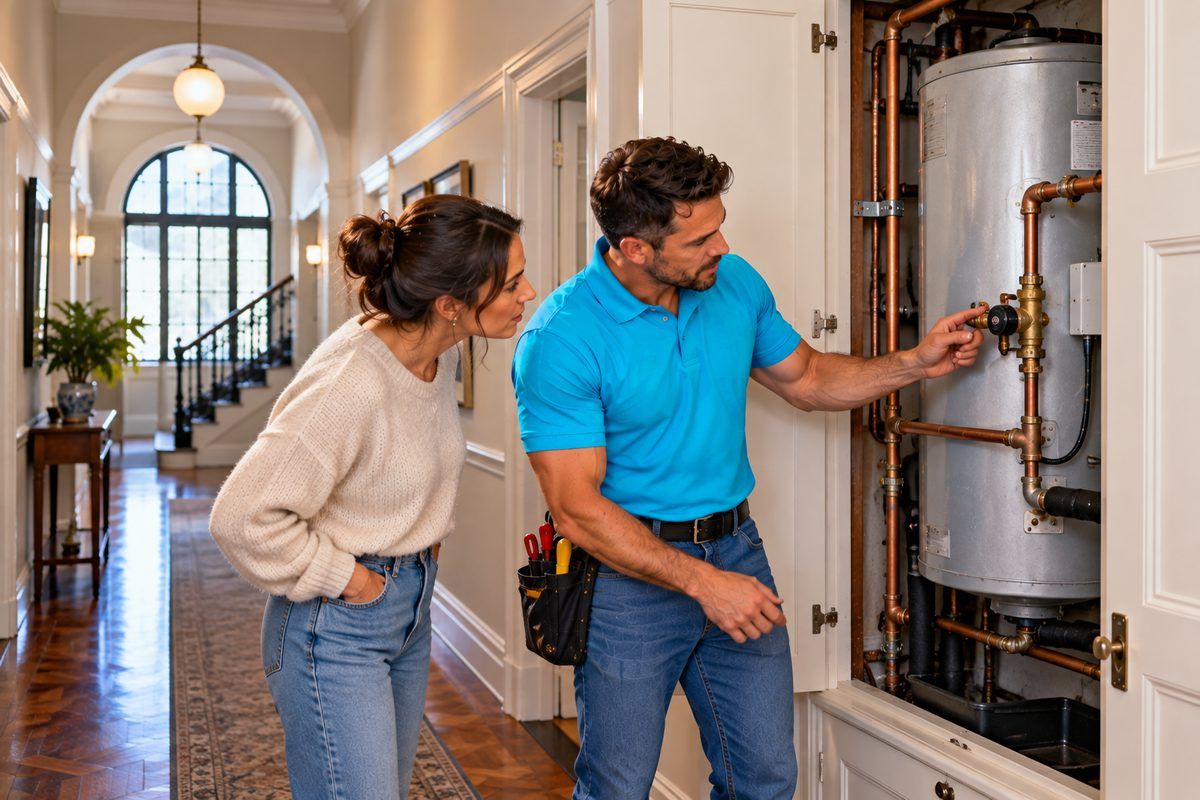
In a flat, the item that most often needs thought is the geyser. It's usually inside the unit, in a cupboard or a ceiling, and SANS 10254 calls for a drip tray, and for overflow and relief pipes that discharge outside the building. In an upper-floor unit that can mean a longer pipe run, and because outside walls are usually common property, possibly the body corporate's permission to take a pipe through one.
The electrical certificate in an older building
Under the Electrical Installation Regulations, 2009, an installation that existed before 23 October 1992 was exempt from needing a certificate only as long as the property had not changed hands since 1 March 1994. A sale ends that exemption, so an older flat or house needs a certificate for the whole installation, issued by a registered person after inspecting and testing it. A certificate older than two years can't be used for a change of ownership either.
In buildings that are decades old, the items that usually need work are the predictable ones: a board without earth leakage protection, circuits without an earth conductor, or wiring that has been extended bit by bit over the years.
Older houses in Tamboerskloof and Gardens
Tamboerskloof has Victorian houses, some with formal heritage status. Older houses often have pipework and wiring of several different ages, and geysers fitted into tight roof spaces, so give the inspection a little more time.
Any alteration to a building older than 60 years needs a permit from Heritage Western Cape, and properties in a heritage protection overlay zone have their own rules. If remedial work would change the building itself, such as a new pipe or conduit through an outside wall, check whether a permit applies before the work is done.
Camps Bay: larger homes, steep sites
Camps Bay homes sit on steep slopes below the Twelve Apostles and Lion's Head. On a larger house there's simply more on the electrical certificate: pool pumps, gate motors, outdoor and garden lighting, and any inverter or solar system. Where the City supplies the electricity, solar PV systems must also be authorised by the City, which is separate from the certificate.
If there's an electric fence, it needs its own electric fence system certificate under the Electrical Machinery Regulations, 2011, issued by a registered electric fence installer. Our electrical team handles it on the same visit.
Gas in apartments and houses
If the unit or house has a fixed gas installation, such as a gas hob or gas geyser connected to a cylinder, the Pressure Equipment Regulations require a certificate of conformity from an authorised gas practitioner, registered with SAQCC Gas, when the ownership changes. In a block, check the body corporate's rules on where cylinders may stand. We inspect the gas installation ourselves; the certificate of conformity is issued by a SAQCC Gas registered installer we work with, who also does any work that's needed.
Beetle
A beetle certificate isn't a legal requirement, but many Western Cape sale agreements ask for one. In a flat, check what the clause covers. Our beetle inspections are done by a specialist pest contractor under the Lightning Fast umbrella.
Atlantic Seaboard and City Bowl inspections
We inspect in Sea Point, Green Point, Gardens, Tamboerskloof, Camps Bay and the rest of the Atlantic Seaboard and City Bowl every weekday. Estate agents can book a CoC inspection online: choose the area, pick an open time, and we confirm. We need 48 hours to line up every trade, so the next two days are never shown. Sellers can call or WhatsApp us on 074 490 3100.
Compliance inspections for a sale are available anywhere in Cape Town. Day-to-day repairs and emergency call-outs we keep to the Southern Suburbs and South Peninsula, where our team is based.
How we handle it
We record the inspection on site in our own app, and you get a photographed report by 11am the next day, showing every finding and the rule behind it. If something needs fixing, you get an itemised quote for that trade. When more than one certificate is involved, each trade is reported and quoted separately, and then brought together in one combined quote, so the seller sees the full picture in one place. You're free to use our report to get other quotes.
Once the work is done, the certificate is issued. Our work carries a 12-month guarantee. We're PIRB registered, IOPSA members, and have been trading since 1996.
Not sure which certificates the sale needs? Here's a plain guide to all five.
Common questions
Do I need a plumbing certificate to sell a flat in Sea Point?
Yes. The City of Cape Town's Water By-law requires a plumbing certificate of compliance before transfer, and it applies to sectional title units as well as houses.
Who is responsible for the common property certificates?
The body corporate. The seller is responsible for compliance within their own section, and the conveyancer will usually want copies of the body corporate's certificates as well.
My flat's electrical certificate is three years old. Can I use it?
Not for the transfer. The Electrical Installation Regulations say a change of ownership may not be allowed if the certificate of compliance is older than two years.
Which days do you inspect on the Atlantic Seaboard and in the City Bowl?
Every weekday. Estate agents can book online with 48 hours' notice, and sellers can call or WhatsApp us on 074 490 3100.