
 Guides · Compliance
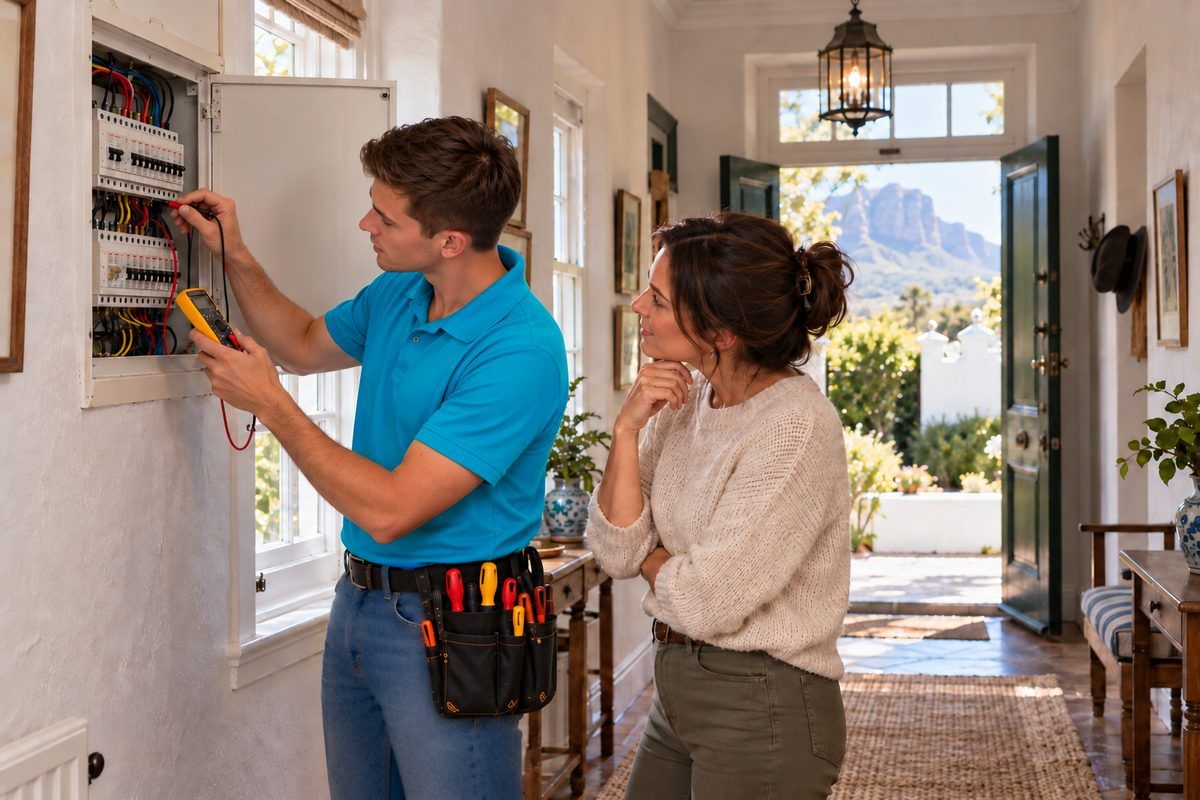
Unlike the plumbing certificate, the electrical certificate of compliance is a national requirement. Whether the home is in Durbanville, Bellville, Brackenfell, Kuils River, Parow, Milnerton or Table View, the seller will need a valid one for the transfer.
We now do compliance inspections for property sales anywhere in Cape Town, with Northern Suburbs visits on Mondays and Thursdays. Here's what the certificate covers, how old it may be, and what most often needs attention.
What the regulations say
The Electrical Installation Regulations, 2009, made under the Occupational Health and Safety Act, require every user or lessor of an electrical installation to have a valid certificate of compliance. Only a registered person may issue one: an electrical tester for single phase (single-phase homes only), an installation electrician or a master installation electrician. They must inspect and test the installation first, against the national wiring standard, SANS 10142-1.
The two-year rule
The regulations also say that a change of ownership may not be allowed if the certificate of compliance is older than two years. A seller with an older certificate will need a new inspection.
And if anything has been added or altered since the last certificate, such as a new circuit, a flatlet or an inverter, that work needs certifying too, however recent the original certificate is.
What the certificate covers
The certificate covers the fixed installation, from the main switch at the distribution board out to every point where electricity is used. The supplier's equipment, up to the point of supply, isn't part of it.
- The distribution board. Correctly rated circuit breakers, a working earth leakage unit, labelling and a proper cover.
- Earthing and bonding. The installation must be properly earthed, including metal water pipes and the geyser.
- Wiring. Cable sized for each circuit, no exposed or perished conductors, and no taped joints.
- Plugs, switches and lights. Securely mounted, correctly wired and undamaged.
- Fixed appliances. The circuits and isolators feeding the geyser, stove, pool pump and gate motor.
What it doesn't cover: the electric fence
An electric fence needs its own electric fence system certificate under the Electrical Machinery Regulations, 2011. A fence installed before those regulations needs one when the property changes hands after 1 October 2012, and it must be issued by a registered electric fence installer. Our electrical team handles the fence certificate too, so mention the fence when you book and it's done on the same visit.
Things to look at in Northern Suburbs homes
Additions, flatlets and outbuildings
Wherever a garage has been converted, a flatlet built or a pool pump and gate motor added, the wiring to it is part of the certificate. This kind of work is often done after the last certificate was issued, which is why it's the first thing to check.
Homes in estates and complexes
In a sectional title scheme, the owner is responsible for compliance within their own section, and the body corporate for the common property, such as security lighting, gate motors and shared electric fences. The conveyancer will usually want copies of the body corporate's certificates with the seller's own, so ask the managing agent for them early.
Solar, inverters and batteries
An inverter, battery or solar panels connected to the house wiring are part of the electrical installation and must be covered by the certificate. Where the City of Cape Town supplies the electricity, every solar PV system must also be authorised by the City and use an approved inverter. That authorisation is separate from the certificate of compliance, so find the paperwork before you list.
Northern Suburbs inspections: Mondays and Thursdays
Our office is in Fish Hoek, so we group our Northern Suburbs inspections on Mondays and Thursdays. Estate agents can book a CoC inspection online: choose the Northern Suburbs, pick an open time, and we confirm. We need 48 hours to line up every trade, so the next two days are never shown. Sellers can call or WhatsApp us on 074 490 3100.
Compliance inspections for a sale are available anywhere in Cape Town. Day-to-day repairs and emergency call-outs we keep to the Southern Suburbs and South Peninsula, where our team is based.
How we handle it
We record the inspection on site in our own app, and you get a photographed report by 11am the next day, showing every finding and the rule behind it. If something needs fixing, you get an itemised quote for that trade. When more than one certificate is involved, each trade is reported and quoted separately, and then brought together in one combined quote, so the seller sees the full picture in one place. You're free to use our report to get other quotes.
Once the work is done, the certificate is issued. Our work carries a 12-month guarantee. We're PIRB registered, IOPSA members, and have been trading since 1996.
A registered electrician does the electrical inspection and testing. We usually do the plumbing certificate on the same visit, and gas and beetle too if the sale needs them. Here's which certificates a Cape Town sale usually needs.
Common questions
How old can an electrical certificate be when I sell?
The Electrical Installation Regulations say a change of ownership may not be allowed if the certificate of compliance is older than two years. Any electrical work added or altered since the last certificate also has to be certified.
Does the electrical certificate cover my inverter and solar panels?
Yes. They are part of the electrical installation. Where the City of Cape Town supplies the electricity, the system must also be authorised by the City, which is a separate process.
Is the electric fence covered by the electrical certificate?
No. An electric fence needs its own electric fence system certificate, issued by a registered electric fence installer. Our electrical team handles both.
Who may issue an electrical certificate of compliance?
Only a registered person: an electrical tester for single phase (single-phase homes only), an installation electrician or a master installation electrician, after inspecting and testing the installation.