
 Guides · Geysers
Plumstead takes its name from a district of London: an Englishman, Henry Batt, bought the old farm here in 1807 and renamed it. Today it's one of the larger Southern Suburbs, split by Main Road and the railway line into Plumstead Upper and Plumstead proper, and most of its homes were built in the 1940s and 50s. In a house that age, the geyser in the roof is rarely the first one, and when it fails, it's a good moment to think about what should replace it.
The three options
Electric geyser
The lowest upfront cost and the simplest swap, but the most expensive to run. Heating water is one of the biggest items on a household electricity bill.
Heat pump
A heat pump heats water using a fraction of the electricity of an element, and works well in Cape Town's mild winters. It costs more upfront, but the running savings pay it back over time.
Solar geyser
A solar geyser uses free energy on sunny days and needs a backup for Cape Town's rainy winters. It depends on having a suitable roof with the right orientation.
What else to check in a 1940s or 50s house
- The pipework. Houses of this era often still have old galvanised steel pipes, which rust from the inside and reduce flow. A geyser replacement is a sensible time to replace the sections around it.
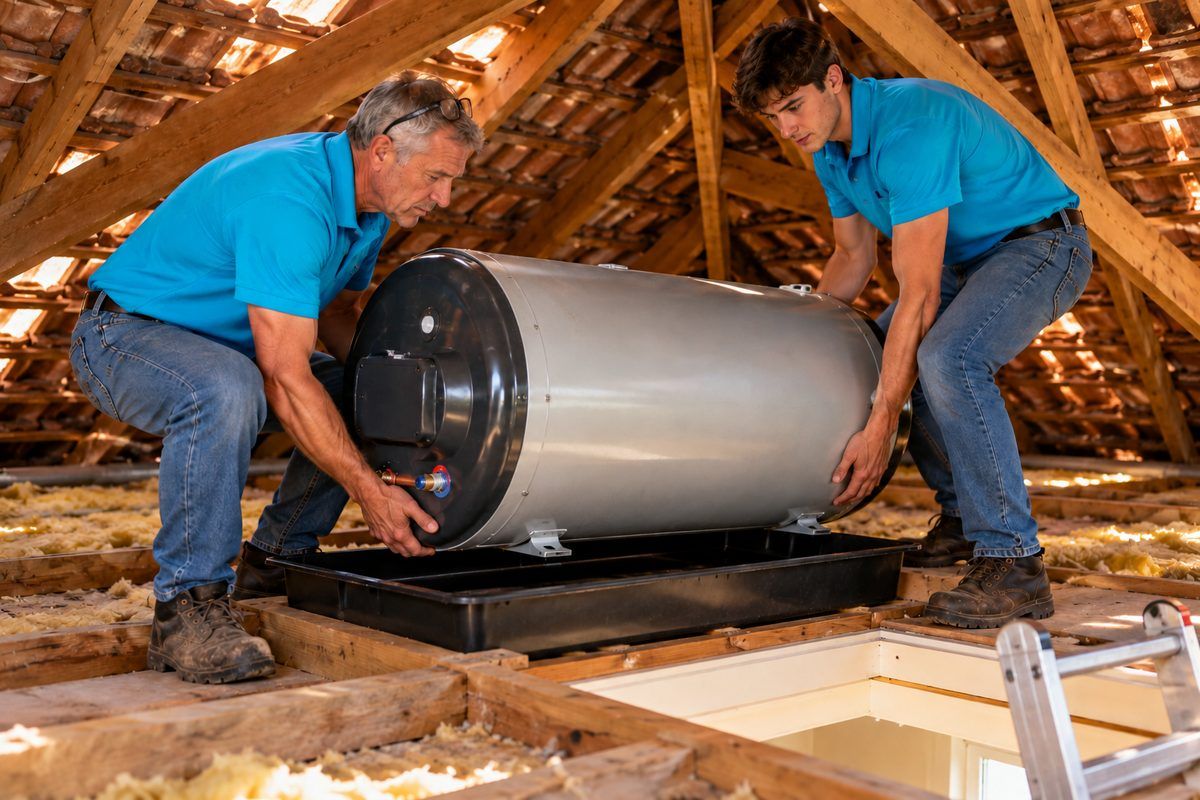
- The roof space. A new geyser needs proper support, a drip tray and a correctly routed overflow, installed to the current standard.
- The wiring to the geyser. The circuit, isolator and earthing need to be right for the new installation.
If insurance is paying
Insurers usually pay to replace the geyser itself, but not to bring the rest of the installation up to current regulation. We show you in writing which part is covered and which isn't, before any work starts.
How we work in Plumstead
You get a photographed report, recorded on site in our own app, with an itemised quote for each option, so you can compare them properly. Every geyser installation comes with a compliance certificate. We cover Plumstead and the rest of the Southern Suburbs on one flat call-out rate.
Common questions
Should I replace my electric geyser with a heat pump?
If you use a lot of hot water and plan to stay in the house, a heat pump usually pays for itself through lower electricity bills. We can compare the options for your household.
Can the new geyser go where the old one was?
Usually, yes, but the support, drip tray and overflow must meet the current standard, which older installations often don't.
Do I get a certificate for a new geyser?
Yes. Every geyser installation must have a plumbing certificate of compliance, and we issue one with every job.