
 Guides · Geysers · From the job
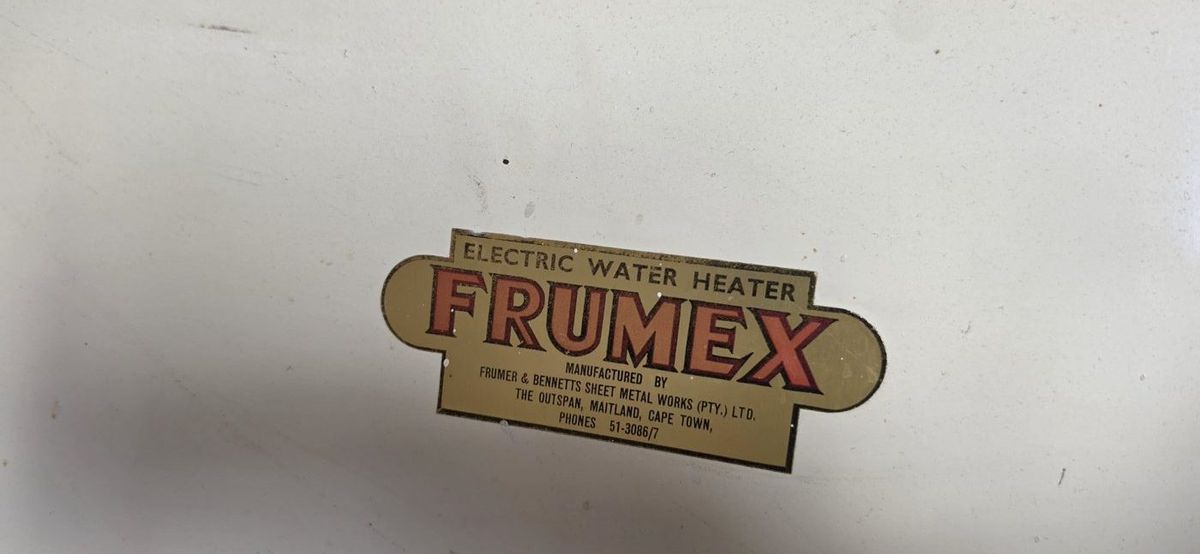
Last week a geyser burst in a block of flats in Diep River, about 60 years old. When we took it down, it turned out to be a piece of Cape Town history: a Frumex electric water heater, made by Frumer & Bennetts Sheet Metal Works in Maitland. It had very likely been there since the flats were built.
What the rating plate tells you
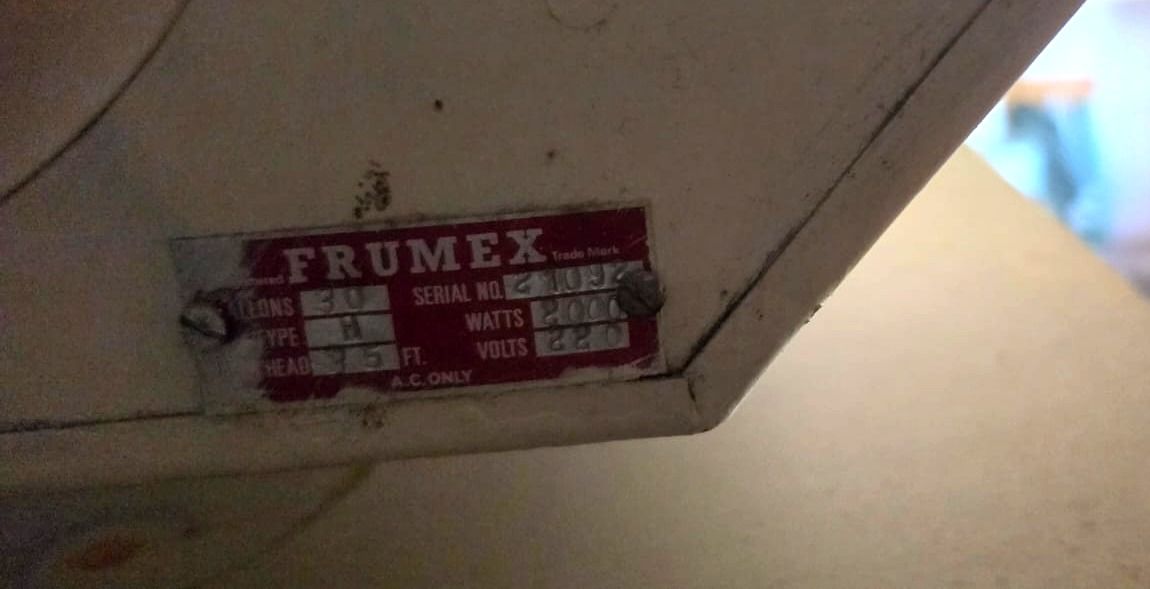
- 30 gallons, about 136 litres.
- 2000 W at 220 V. Modern elements are usually 2 or 3 kW at 230 V.
- 35 ft working head, about 105 kPa.
South Africa began changing to metric units in 1967 and finished in the late 1970s, so a plate in gallons and feet dates the geyser to before that.
A low-pressure geyser, fed by gravity
This geyser never ran on mains pressure. It was fed from a small header tank above it, and gravity did the rest. "35 ft working head" is the greatest height of water standing above it that it was built to take: about 10.7 metres, or roughly 105 kPa.
Its replacement is a mains-pressure geyser rated at 600 kPa, almost six times as much. That's why a modern installation needs so much more around it.
How it failed
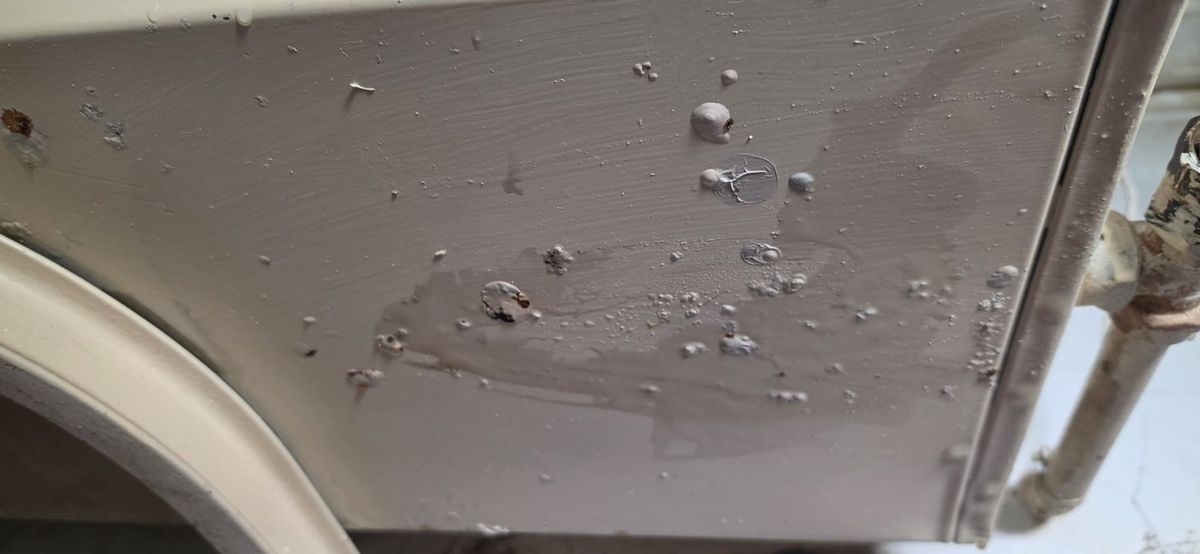
It rusted through from the inside and burst one Friday lunchtime. After decades of service, that's not a bad innings for a geyser made in Maitland.
The problem: no room for the valves
Today's installation standard, SANS 10254, asks for a lot more than a 1960s geyser ever had: a pressure control valve, vacuum breakers, a safety valve and a drip tray, all piped correctly. The original geyser hung on a kitchen wall tucked under a flat roof, and in that space there simply wasn't room for all of it.
So the team:
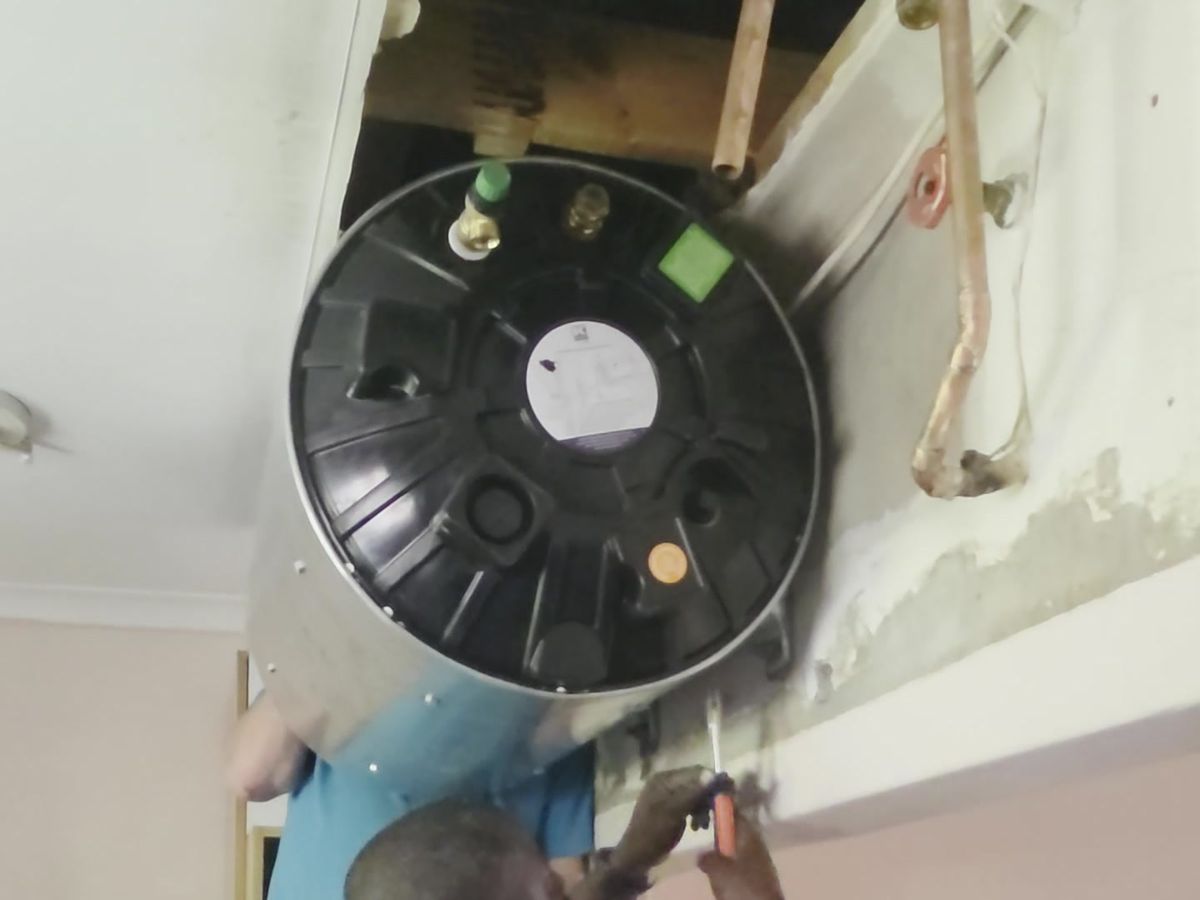
- cut back the ceiling board to gain an extra 30 cm into the flat-roof cavity,
- changed the new geyser's mounting feet so it could hang on the wall,
- and fixed it with chemical anchors, not Rawl bolts.
Why chemical anchors and not Rawl bolts
A Rawl bolt grips by expanding inside the hole and pushing outward against the brick. In old, soft brickwork that outward pressure can crack or crumble the wall, and 100 litres of water weighs 100 kg before you even count the geyser itself.
A chemical anchor is resin injected into a cleaned, drilled hole. The threaded rod sets inside it and bonds to the masonry without pushing outward on the brick. It takes longer, because the resin has to cure before you load it, but on a 60-year-old wall it's the right way to do it.
The result: a new geyser hung on threaded rods set in resin and locked down with washers and nuts, with every valve the regulations require.
Old geysers across the Southern Suburbs
Low-pressure geysers like this one are still common in older flats and homes across the Southern Suburbs and South Peninsula: in Diep River, Plumstead, Wynberg, Kenilworth and Rondebosch, and from Muizenberg and Kalk Bay to Fish Hoek. If yours bursts tonight, start with our burst geyser steps for Diep River, Steenberg and Muizenberg. If you're weighing up what to replace yours with, read electric, solar or heat pump. In a block of flats, it's worth knowing who fixes what before the geyser goes.
Common questions
How do I know if my geyser is a low-pressure one?
Look for a small tank higher up in the roof feeding it, or a vent pipe rising above the geyser instead of a pressure control valve on the cold inlet. Low-pressure systems usually give weaker flow at the hot taps than at the cold ones. If you're unsure, a photo of the geyser and its pipework on WhatsApp is often enough for us to tell you.
Can an old low-pressure geyser simply be swapped for a modern one?
Usually, but not always like for like. A mains-pressure geyser needs the valves and drip tray the old one never had, and the pipework has to handle the higher pressure. In tight spaces that can mean opening up the ceiling, as on this job. We check all of this before quoting, so there are no surprises halfway through.
Why not just use the bolts that are already in the wall?
Old fixings were sized for a different geyser, often in brickwork that has weakened over the decades. A new geyser full of water is heavy, and it's fixed to the wall for many years, so it gets new fixings chosen for the wall it's going on.